The Man Who Survived Two Atomic Bombs
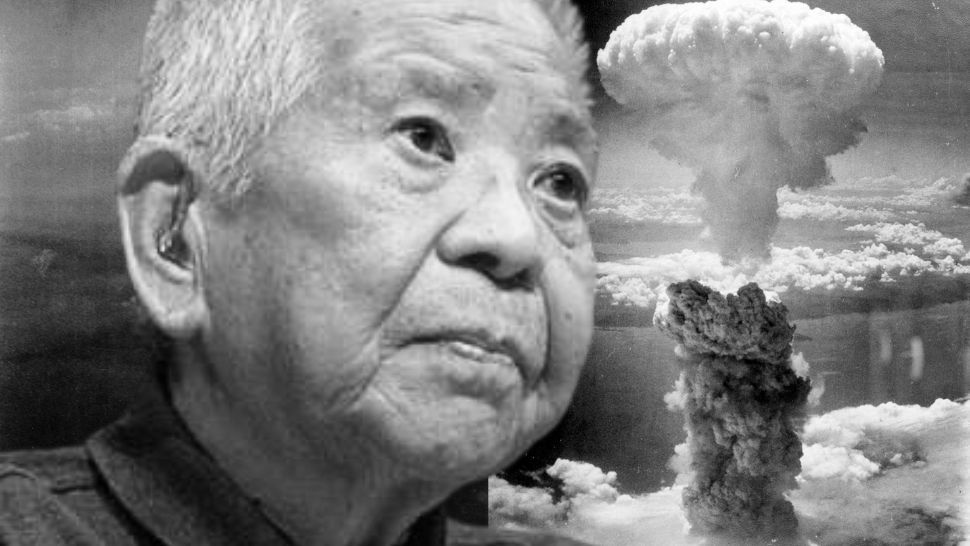
Tsutomu Yamaguchi was standing in a muddy potato field in Hiroshima when the sky burst into blinding light. It was August 6, 1945, and the world first atomic bomb had just exploded less than two miles away. He survived that terrible morning, got on a train home to Nagasaki, and then walked straight into the second atomic bomb three days later.
Most people cannot imagine living through one nuclear explosion, let alone two. Tsutomu Yamaguchi did not just live through them, he survived both ground zeros, cared for his family, and lived to be 93 years old. His life sounds like a movie script, but every single detail is recorded history.
A Normal Business Trip to Hiroshima
Summer in Japan was hot and exhausting in 1945. Tsutomu was a 29-year-old draftsperson for Mitsubishi Heavy Industries. He spent three long months in Hiroshima designing oil tankers, missing his wife Hisako and their baby son back home. August 6 was supposed to be his very last day in the city.
Around 8:15 that morning, Tsutomu was walking to the shipyard. He heard the quiet hum of a plane overhead. Looking up, he saw an American B-29 bomber drop a small object attached to parachutes. Suddenly, a flash of white light filled his whole vision, bright as a thousand bolts of lightning hitting at once. The blast tore his ear drums, burned the left side of his upper body, and blew him into the dirt.
He crawled to a nearby shelter through dark clouds of falling ash. Over 70,000 people died instantly in Hiroshima that day. Tsutomu spent a agonizing night in a crowded bomb shelter, his skin raw and painful, clutching his ruined ears. He wanted nothing more than to see his family one last time.
The Train Ride Home to Nagasaki
By the next morning, parts of the city were still on fire. Tsutomu stumbled through melted streets to reach the train station. Remarkably, despite the total destruction of the city, the iron tracks on the edge of town still worked. Packed tightly with bruised and terrified passengers, the train creaked out of the ruins.
He reached Nagasaki on August 8. His wife barely recognized him under the thick white bandages covering his face and arms. His body burned with fever, but he was relieved to be back in his own house. Like the famous story of Hachiko the Dog Who Waited Ten Years at a Station, Tsutomu showed an incredible willingness to endure terrible pain just to return home.
He could have stayed in bed. Instead, he forced himself to get up the next morning. He felt it was his duty to report to his boss and explain why he had missed his work deadline in Hiroshima.
Lightning Strikes the Same Man Twice
On August 9, right around 11:00 in the morning, Tsutomu stood in an office building in Nagasaki. He was telling his supervisor about the giant bomb that wiped out Hiroshima. His boss thought he was crazy. How could one single bomb destroy a whole city?
Right at that exact second, the sky outside turned brilliant white. The second bomb, named Fat Man, exploded above Nagasaki. The blast wave shattered the heavy glass windows and blew off the office roof. Tsutomu fell to the floor, instantly covered in falling dust and plaster.
He survived the blast again because the concrete walls of the building blocked the worst heat wave. But the terrifying horror was identical. He scrambled out into the street, desperate to find his wife and son. Luckily, Hisako had taken their baby out to look for burn ointment for Tsutomu, and they had taken shelter in a deep tunnel when the siren blew.
How Did He Live Through Both Blasts?
Scientists and historians have spent decades studying how anyone could survive two nuclear explosions at close range. Much of it comes down to sheer luck and split-second choices. If you love discovering unbelievable true stories from history, this case is the ultimate example of beating impossible odds.
In Hiroshima, Tsutomu was about two miles from ground zero. He saw the flash and had just enough time to drop flat into a ditch, covering his eyes and ears. That simple movement saved his internal organs from the worst shockwave. In Nagasaki, he was inside a reinforced building that did not collapse right away. People standing outside near him died instantly.
His story became a key part of oral history recorded after the war. For years, Tsutomu did not talk much about what happened. He dealt with severe radiation sickness, lost his hair, and suffered from bad burns for months. Yet his body slowly healed, and he went back to work as a translator for the US military before becoming a school teacher.
A Long Life Built on Hope
For most of his life, Tsutomu was registered as a survivor of the Nagasaki bomb only. It was not until 2009 that the Japanese government officially recognized him as a double survivor, known in Japan as a double hibakusha. Officials checked his travel records and hospital logs to confirm he was within two miles of both hypocenters.
When journalists asked him why he finally decided to speak out in his nineties, he smiled softly. He said he wanted young people to understand the real cost of nuclear weapons. He wrote a book, spoke at the United Nations, and even met movie director James Cameron to talk about his life.
Tsutomu Yamaguchi passed away peacefully from cancer in January 2010 at the age of 93. He outlived many of his peers who were nowhere near the explosions. His life reminds us how tough the human body can be when faced with absolute nightmare scenarios.
What would you have done if you survived one terrible blast like that? Would you have had the strength to get up and keep moving forward the very next day?


Comments
Post a Comment